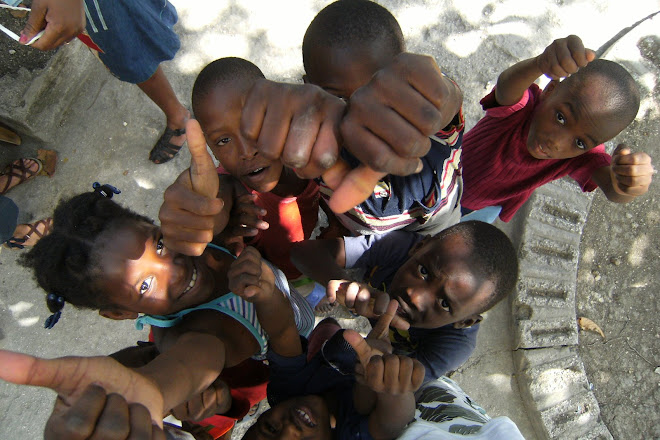
Haiti, in the West Indies, occupies the western third of the island of Hispaniola, which it shares with the Dominican Republic. About the size of Maryland, Haiti is two-thirds mountainous, with the rest of the country marked by great valleys, extensive plateaus, and small plains.
 Public education is free, the cost is still quite high for Haitian families who must pay for uniforms, textbooks, supplies, and other inputs. Due to weak state provision of education services, private and parochial schools account for approximately 90% of primary schools, and only 65% of primary school-aged children are actually enrolled. At the secondary level, the figure drops to around 20%. Less than 35% of those who enter will complete primary school. Though Haitians place a high value on education, few can afford to send their children to secondary school and primary school enrollment is dropping due to economic factors. Remittances sent by Haitians living abroad are important in paying educational costs.